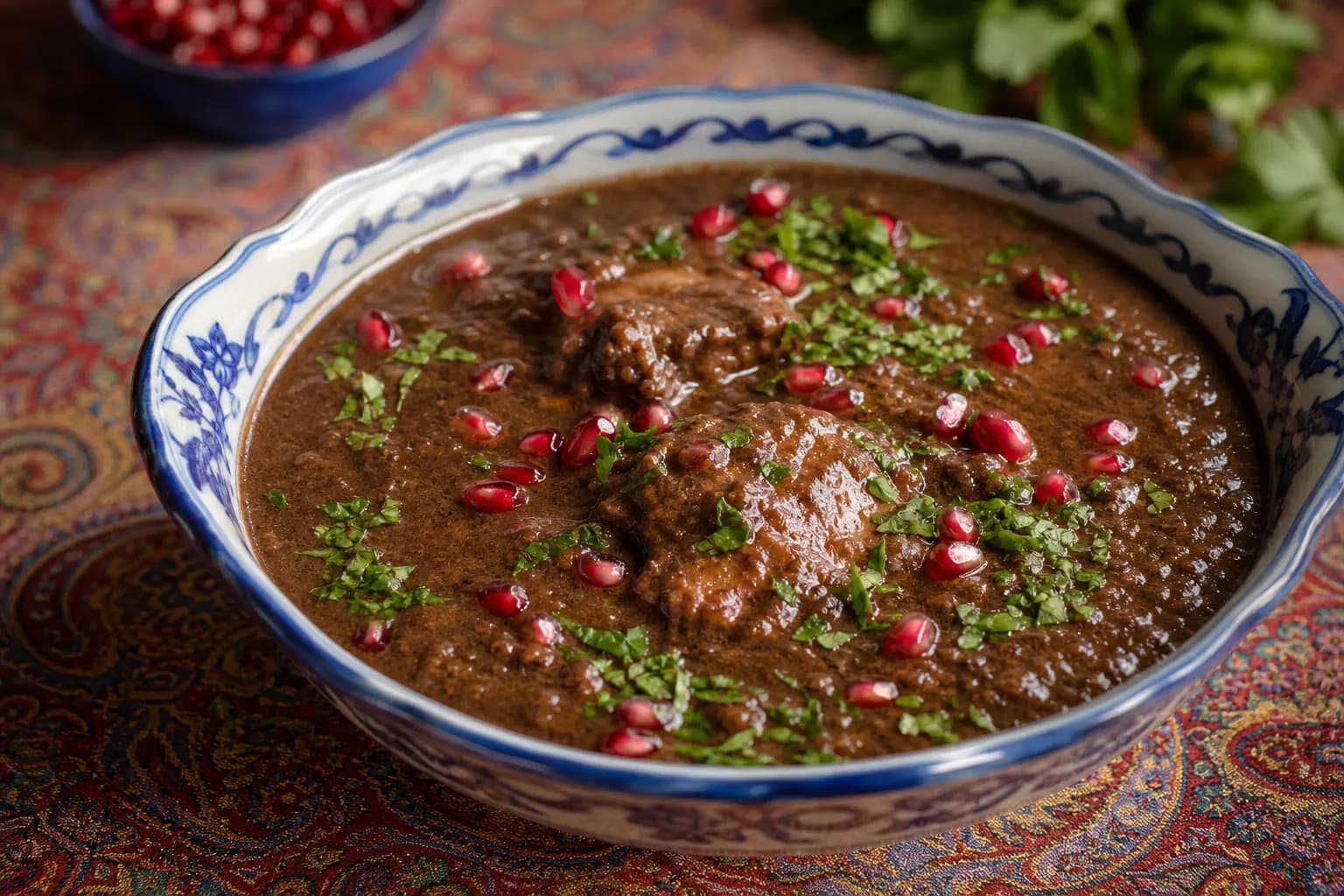
Persian Gheimeh Stew
Make authentic Persian Gheimeh Stew with tender meat and tangy flavors, perfect for any gathering.
5.0(2 ratings)
Persian Gheimeh stew, a staple of Iranian cuisine, combines tender cubes of meat with split peas, tomatoes, and uniquely aromatic spices with a tang from dried limes. This hearty dish is often served at gatherings and holds the heart of comfort food in many Persian households. Our recipe ensures that the meat is perfectly tender and the flavors are well-balanced for an authentic taste.
Origin/Background
Originating from Persia, Gheimeh holds a special place in traditional Iranian celebrations and everyday meals. Known for its aromatic spices and rich flavor profile, Persians often prepare it in large quantities to share with family and friends. The addition of dried Persian limes is unique to Persian cooking, providing a distinct tanginess typical of many Iranian stews.
Key Ingredients and Substitutions
The key ingredients in Gheimeh include lamb or beef, split peas, and dried Persian limes (limoo amani). While lamb offers a rich flavor, beef is a more common and affordable choice, maintaining the dish's signature taste. If you cannot find split peas, lentils can be an alternative, though they will alter the flavor and texture slightly. Dried Persian limes are essential for the authentic taste if you don’t have access to them, using a splash of lemon juice can offer a different yet pleasing sourness.
Technique Notes
The process of making Gheimeh involves browning the onions and meat first. This stage not only helps develop flavors but also ensures that the meat remains juicy and tender throughout the cooking process. Adding the split peas and dried limes early allows them to soak in the flavors of the stew, ensuring they become soft without disintegrating. Monitoring the stew as it simmers is important to prevent the split peas from becoming mushy.
Serving Suggestions
Gheimeh is traditionally served with Persian rice, which helps soak up the savory sauce. Garnishing with crispy potato sticks adds texture and is visually appealing. This stew is also great with a side of pickled vegetables, fresh herbs, and yogurt to balance its richness.
Storage/Reheating
Leftover Gheimeh can be stored in an airtight container in the refrigerator for up to 3 days. To reheat, use a saucepan over low heat, adding a splash of water to reach the desired consistency. Freezing is another option, though it should be cooked gently from frozen to avoid texture changes in the split peas.
Persian Gheimeh Stew
140 min 4 servings 450 Calories
Ingredients
Method
Tap a step to mark it done.
Nutrition per serving (estimate)
- Calories
- 450
- Protein
- 28 g
- Carbs
- 35 g
- Fat
- 20 g
Rate this recipe
· 5.0/5 (2 ratings)
Tips for success
- Ensure the split peas are rinsed well to remove excess starch, which can make the stew cloudy.
- Piercing the Persian limes allows their flavor to infuse the stew without breaking apart.
- For a richer flavor, consider browning the meat in small batches.
- If the stew is too thick upon reheating, add a little water to reach your desired consistency.
- Fried potato sticks are a traditional garnish, but you can also use baked potato slices for a healthier option.
Frequently asked questions
What can I substitute for Persian limes in Gheimeh?
Lemon juice or a small amount of lime zest can be used to provide tartness, though the flavor will differ slightly.
How should I serve Persian Gheimeh stew?
Served best with steamed basmati rice and garnished with crispy potato sticks. A side of yogurt or pickled vegetables complements it well.
Can I use chicken instead of lamb or beef in Gheimeh?
Yes, chicken can be used as a lighter alternative, but it should be cooked for a shorter time to prevent drying out.
Can Gheimeh be made in advance?
Yes, Gheimeh improves in flavor as it sits, making it a great make-ahead dish. Store in an airtight container in the fridge.
Is Gheimeh suitable for a vegetarian diet?
While traditional Gheimeh is meat-based, it can be adapted by using mushrooms or eggplant as a substitute for the meat portion.
Reviews
No reviews yet. Be the first to share how it went.