Persian Fesenjan Stew
Persian Fesenjan Stew is nutty and tangy, perfect for a comforting meal.
5.0(1 ratings)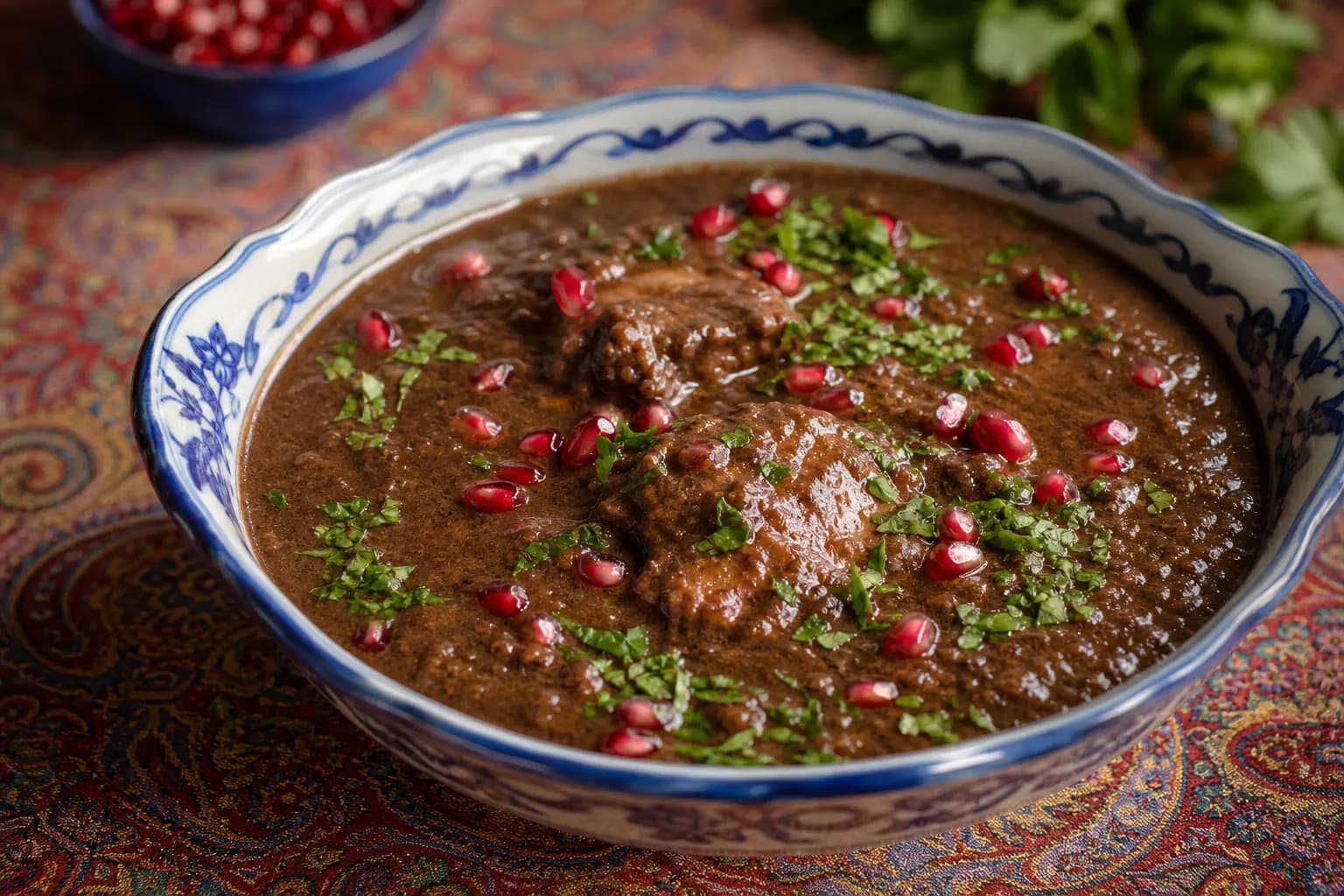
Fesenjan, an iconic Persian stew, combines the richness of walnuts with the tartness of pomegranate molasses to create a savory and sophisticated dish. This recipe brings out the best of both traditional elements, creating a deep, satisfying flavor profile. Serve it with rice for a complete meal that delights the senses.
Origin and Background
Fesenjan is an ancient dish, traditionally made with duck or chicken, though variations exist. Originating in northern Iran, especially during the chilly months, it offers much-needed warmth through its nutty, saffron-infused sauce. This recipe respects its historic roots while lending a slightly modern approach by balancing sweetness with a tart pomegranate taste.
Key Ingredients and Substitutions
Walnuts and pomegranate molasses are non-negotiable stars of fesenjan. They create the stew's distinct nutty and tangy flavors. If you cannot find pomegranate molasses, try using more accessible ingredients like balsamic vinegar with some sugar, though it may not exactly replicate the original taste.
Choosing fresh, quality walnuts is critical since they form the stew's base. Freshly ground is preferable to store-bought ground nuts for the freshest flavor. Chicken thighs are chosen here for their rich, succulent texture, but any chicken parts can work.
Technique Notes
Begin by browning the chicken. This step is fundamental to build depth of flavor. Ensure not to overcrowd the pot to achieve a nice golden crust. The real magic happens when you gradually cook the ground walnuts and let them thicken the sauce. Stirring occasionally prevents the walnuts from sticking and burning.
The pomegranate molasses is added for its acidity and sweetness—balance the tartness according to your palate with a bit of sugar. Low and slow cooking allows the flavors to meld, resulting in a beautifully thick, rich sauce.
Serving Suggestions
Fesenjan is best served with traditional Persian saffron rice, known as chelo. The textures complement each other perfectly, and the saffron adds a fragrant touch. Finish with a sprinkling of finely chopped parsley or pomegranate seeds if they're in season.
Storage and Reheating
Fesenjan's flavors deepen over time, making it a perfect make-ahead dish. Store in an airtight container in the refrigerator for up to 3 days. Reheat gradually over low heat to preserve its complex flavors, and avoid microwaving as it may alter the sauce's consistency.
Persian Fesenjan Stew
140 min 4 servings 550 Calories
Ingredients
Method
Tap a step to mark it done.
Nutrition per serving (estimate)
- Calories
- 550
- Protein
- 25 g
- Carbs
- 20 g
- Fat
- 40 g
Rate this recipe
· 5.0/5 (1 ratings)
Tips for success
- Ensure walnuts are finely ground to avoid a grainy texture in the stew.
- Don't rush the low simmer; it's key for deep flavors and sauce thickness.
- Adjust sugar based on the tartness of your pomegranate molasses.
- If you're short on time, use a pressure cooker, adjusting times accordingly.
- Remaining stew can be frozen for up to a month; thaw in the fridge before reheating.
Frequently asked questions
What is Fesenjan?
Fesenjan is a Persian stew made with chicken, ground walnuts, and pomegranate molasses, known for its rich and tangy flavor.
Can I make Fesenjan vegetarian?
Yes, you can substitute chicken with eggplant or mushrooms for a vegetarian version.
What is a good substitute for pomegranate molasses?
You can use a mix of balsamic vinegar and sugar, though it won't exactly replicate the original flavor.
How should I store leftover Fesenjan?
Store leftovers in an airtight container in the refrigerator for up to 3 days, or freeze for up to a month.
Can Fesenjan be prepared in advance?
Yes, its flavors develop over time, making it a perfect dish to prepare a day ahead and reheat gently.
Reviews
No reviews yet. Be the first to share how it went.